


Table of Contents
Dental bibs are one of the most commonly used disposable items in dental clinics. However, many procurement staff often focus only on the price, overlooking the differences in specifications such as size, layers, and colors. In fact, choosing the wrong dental bib can not only affect infection control but also impact the patient’s experience. This article will explore the key factors in selecting dental bibs, helping you make precise choices that enhance both the professional image of your clinic and clinical effectiveness.


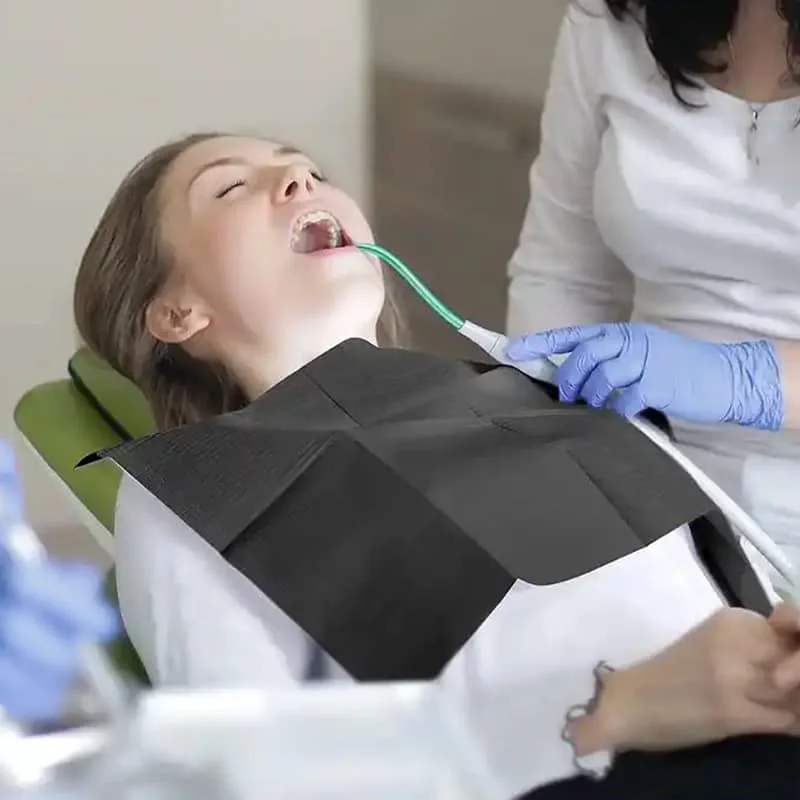
Layers Determine Protection: How Many Layers Do You Need for Your Clinic?
The protective ability of dental bibs typically depends on the number of layers they have. Different layers provide varying levels of absorbency and waterproofing, which is essential for different clinical scenarios.
2-Layer Dental Bibs are the most common standard option. The structure consists of two layers of absorbent paper and one layer of waterproof polyethylene (PE). This type is suitable for routine procedures such as dental checkups or simple fillings. It effectively absorbs small amounts of saliva or water while preventing liquid from leaking through, providing basic protection at an affordable cost. This is widely used in general dental clinics.
3-Layer Dental Bibs are an upgraded version, typically consisting of three layers of absorbent paper and one layer of PE waterproofing. They are ideal for procedures with larger amounts of liquid or longer durations, such as complex extractions, periodontal treatments, or procedures involving heavy irrigation. Though slightly more expensive, they offer superior protection, preventing leakage and ensuring better comfort for patients. This type is especially useful in oral surgery and periodontics departments.
Size Affects Comfort: Standard, Extra-Large, or Pediatric Sizes?
The size of the dental bib directly affects the comfort of the patient and the smoothness of the treatment. Different sizes are suitable for different patient groups, and choosing the right size can improve the patient experience and reduce discomfort.
Standard Adult Size is usually 13″ x 18″ (approximately 33 cm x 45.7 cm). This size is suitable for the majority of adult patients, providing full coverage of the chest area and ensuring the bib stays in place when clipped around the neck. It’s the most commonly used size for most routine procedures.
If your clinic deals with larger patients or needs special positioning (such as for patients who are reclining during treatment), you may want to consider Extra-Large or Extended Sizes. These bibs offer a larger coverage area, ensuring proper protection even when patients change positions during treatment.
For pediatric patients, choosing Pediatric-Sized Bibs is crucial. These bibs are smaller in size and are designed to fit the contours of a child’s body. Using the right size for children avoids discomfort or slippage, ensuring that young patients can focus on their treatment without being distracted by ill-fitting bibs.
Color and Aesthetics: Who Is Your Bib For?
The color of dental bibs is not only about aesthetics; it also plays a role in reflecting the professional image and brand identity of your clinic. Additionally, color can serve functional purposes, such as reducing glare or hiding stains.
Blue and Green are the most commonly used colors for dental bibs. These colors are effective in reducing glare and are visually more forgiving when it comes to stains, particularly from blood or other liquids. Choosing these colors helps maintain a clean and professional appearance in the clinic, especially during long procedures.
White Bibs are typically used in minimalist clinics or environments where clear visibility of stains is needed, such as in research or training settings. While white can show stains more easily, it provides a cleaner and clearer visual effect, which may be desirable in certain situations.
For pediatric patients, color and design are even more important. Bright colors like Pink, Yellow, or fun Cartoon Designs help alleviate children’s anxiety, making their experience more enjoyable and encouraging cooperation during treatment.
Additionally, many clinics choose bibs that match their brand colors to reinforce their overall brand identity and professionalism. For instance, high-end clinics may opt for deep gray, lavender, or other custom colors to elevate the clinic’s aesthetic and align with the clinic’s image.
Special Designs and Accessories: Make Wearing Easier
With the diverse needs of dental treatments, many dental bibs now come with different design innovations to improve ease of wear and comfort for patients.
Tie-less Standard Bibs rely on a bib clip (Bib Clip/Holder) to secure the bib in place. The clips are reusable and can be sterilized at high temperatures, which makes them eco-friendly and durable. This type of bib is widely used and does not require additional tie straps, allowing for quick and easy wear and removal.
Self-Adhesive Bibs feature adhesive strips that allow patients to secure the bib around their neck without the need for clips. Although these bibs are generally more expensive, they offer greater convenience and speed in use, making them a more modern option.
Pocket Bibs, which have a pocket at the bottom, are designed to catch debris, small parts, or excess liquid that may fall off during procedures. These are especially useful during precise procedures like implants or extractions, where it is crucial to maintain a clean and sterile environment.
A Guide to Making the Right Choice
When purchasing dental bibs, it’s essential to consider the needs of your clinic, the types of procedures performed, and the characteristics of your patient demographic. Start by determining the type of procedure (routine vs. surgery) and choose the appropriate layering (2-Ply or 3-Ply). Next, consider the size based on the patient group (adult, pediatric, or large-sized patients). Finally, choose the color and design that aligns with your clinic’s branding or specific departmental needs.
In conclusion, selecting dental bibs should not just be about finding the cheapest option, but about making an informed choice based on your clinic’s requirements and patient comfort. By considering factors such as protection, comfort, and aesthetics, you can ensure that you are choosing the most effective and professional option for your clinic, helping to improve patient care and overall clinic performance.