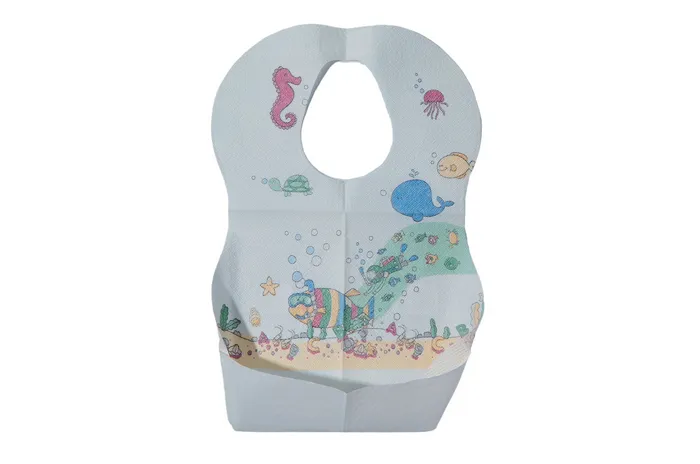
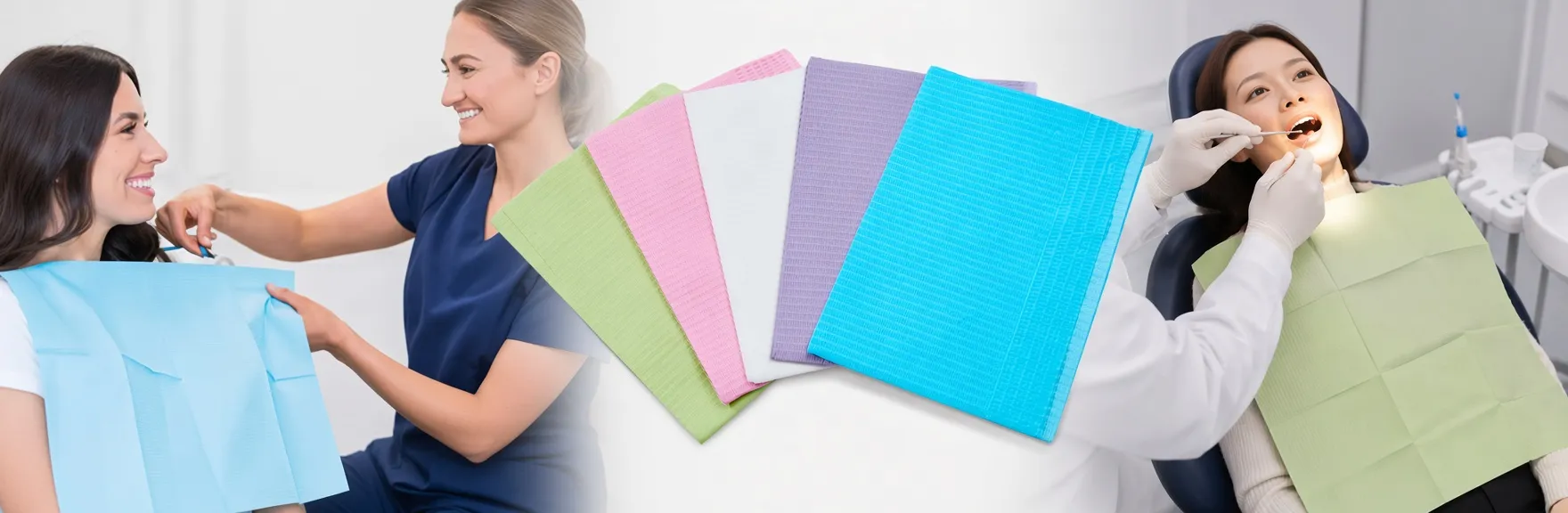
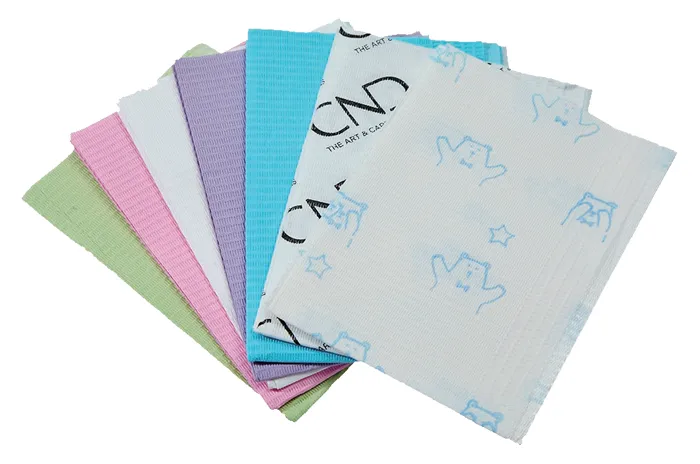
Dental Bibs are designed to provide reliable patient protection during dental procedures. Made with highly absorbent tissue layers and a waterproof polyethylene backing, they effectively prevent fluid penetration while keeping patients comfortable and dry. Available in multiple sizes, colors, and customized options, our disposable dental bibs offer an ideal solution for dental clinics, hospitals, and healthcare professionals.
Disposable dental bibs with high absorbency and waterproof PE backing, providing superior protection, comfort, and hygiene during dental treatments.
Superior Absorbency
Multi-layer tissue construction quickly absorbs saliva, water, and dental fluids, helping maintain a clean treatment environment.
Waterproof Protection
The PE backing layer creates an effective moisture barrier to prevent liquid leakage and protect patient clothing.
Soft & Comfortable
Premium cellulose material provides a soft surface for enhanced patient comfort during procedures.
Tear Resistant Design
Strong laminated layers improve durability and reduce tearing during dental operations.
Hygienic Single Use
Disposable design helps reduce cross-contamination risks and supports infection control practices.
Multiple Custom Options
Available in different sizes, colors, packaging formats, and OEM branding solutions.
A: Dental bibs are usually made from absorbent cellulose tissue paper laminated with a waterproof polyethylene (PE) film backing.
A: 2-ply dental bibs provide standard absorbency, while 3-ply versions offer an additional tissue layer for higher absorption capacity and stronger protection.
A: Yes. The PE backing layer provides moisture resistance and helps prevent liquids from passing through to patient clothing.
A: The most common size is 13 × 18 inches (33 × 45 cm), with customized sizes available according to customer requirements.
A: Yes, latex-free options are widely available for dental and medical applications.
A: Yes. Manufacturers commonly provide customized colors, packaging, logo printing, and private label services.
A: They are commonly used for:
Dental examinations
Teeth cleaning
Oral surgery
Orthodontic procedures
General dental treatments